Understanding and Mitigating Risks of Working at Heights: The Role of Training
Working at heights presents unique challenges that can lead to severe accidents, making it essential for employers and workers to prioritize safety. The dangers are not merely theoretical; they are backed by statistics showing elevated risks of falls and injuries. However, with the right Working at Heights training and systems in place, many of these risks can be effectively managed or mitigated.
Common Hazards Associated with Working at Heights
When discussing Working at Heights safety, several hazards come to the forefront:
- Falls from Height: The most obvious and prevalent danger involves individuals falling from ladders, scaffolds, or roofs. Even falls from low heights can result in serious injuries.
- Unstable Surfaces: Working on uneven, slippery, or poorly maintained surfaces significantly increases the risk of losing balance and falling.
- Weather Conditions: Wind, rain, and even temperature extremes can create hazardous working conditions that compromise safety.
- Equipment Failures: The breakdown of lifting gear, harnesses, or other safety equipment can lead to dangerous situations if not regularly inspected and maintained.
The Importance of Fall Protection Systems
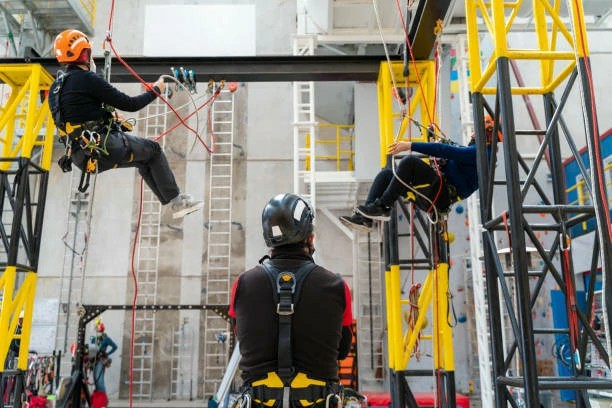
A comprehensive approach to Working at Heights safety includes the deployment of appropriate fall protection systems, which serve as the first line of defense against falls. Common systems include:
- Personal Fall Arrest Systems (PFAS): Comprising harnesses, lanyards, and anchorage systems, PFAS is designed to prevent falls from occurring.
- Guardrails: Physical barriers that are installed around the working area, preventing workers from coming too close to the edge.
- Safety Nets: Nets positioned beneath the working area to catch any falls that may occur, acting as a secondary safeguard.
Emergency Response Planning
No safety measure is truly comprehensive without an effective emergency response plan. Such a plan should include:
- Training On Response Protocols: Workers need to know exactly what to do in the event of an emergency. This training should be part of the Working at Heights certification process.
- Regular Drills: Conducting emergency drills ensures familiarity with emergency procedures and can save lives during an actual incident.
- First-Aid Readiness: Ensuring that team members are trained in first aid can prove invaluable in providing immediate care before professional medical help arrives.
Real-Life Case Studies: Prevention Through Training
Effective training has played a key role in preventing serious accidents in workplaces. Here are two inspiring case studies:
Case Study 1: Construction Site Safety
On a busy construction site in Dublin, a worker was assigned to install roofing. Before beginning work, the team participated in a Working at Heights Course. During the course, they learned how to correctly wear and use a harness and lanyards. One week into the job, heavy winds caused instability. Thanks to their training, workers immediately recognized the risks and ceased work until conditions improved, preventing a potential fall.
Case Study 2: Telecommunications Maintenance
In Cork, a technician was scheduled to perform routine maintenance on a cell tower. The telecom company mandated completion of a Certified Working at Heights Training program for all maintenance staff. During the training, they were taught the importance of double-checking equipment before use. On the day of the maintenance, the technician identified a worn lanyard. Instead of taking unnecessary risks, he replaced the lanyard, thereby avoiding a dangerous fall that could have caused serious injuries.
Conclusion
In conclusion, the risks associated with working at heights are significant and multifaceted. However, they can be mitigated through Working at Heights Training and the implementation of robust safety measures including fall protection systems and effective emergency response planning. Ensuring that workers are well-prepared and knowledgeable about safety protocols can save lives. If you are in need of quality training, consider enrolling in our Working at Heights Course Online to equip yourself with the necessary skills and knowledge to work safely.
For more information on our courses, please visit Working at Heights Course or contact us at [email protected].