Manual Handling Training in Ireland – Stay Compliant & Safe with Irish Manual Handling
What is Manual Handling?
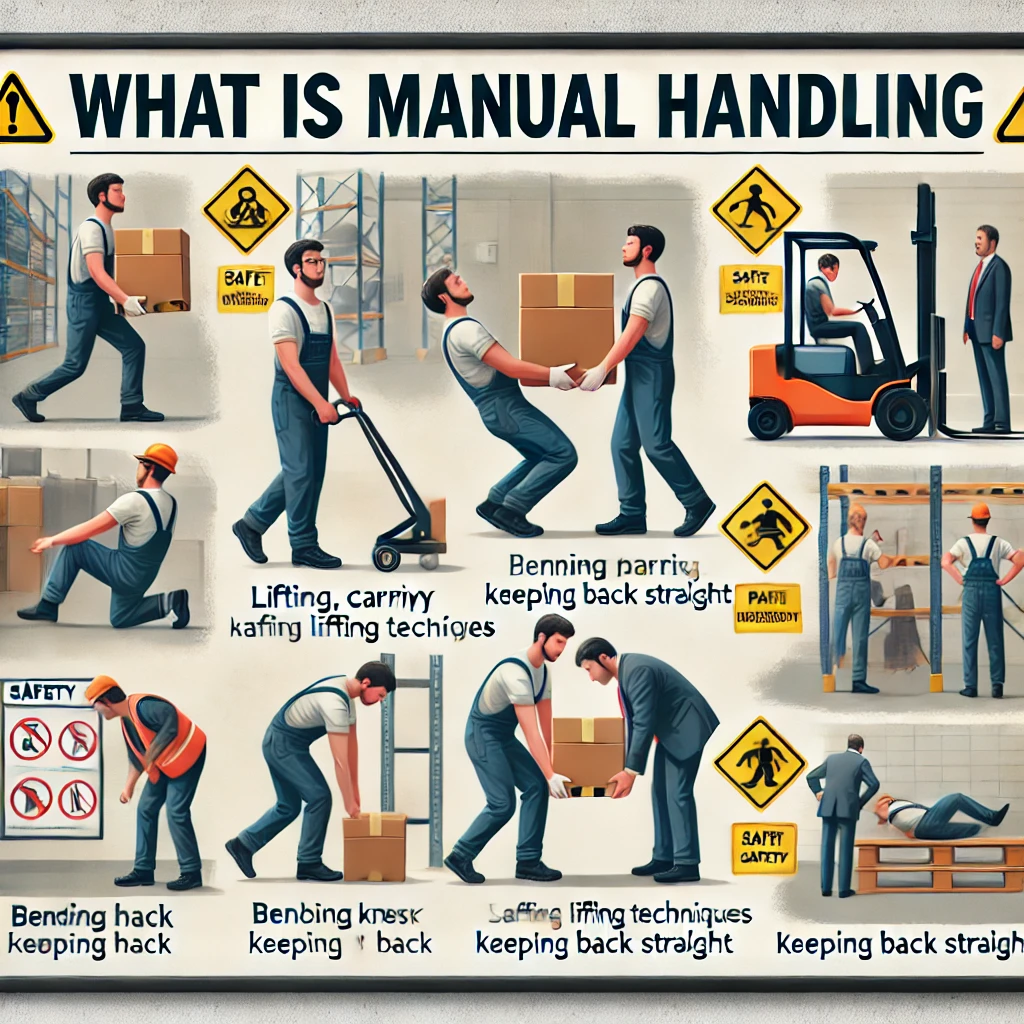
Manual Handling refers to the process of lifting, carrying, pushing, pulling, or moving objects by hand or bodily force. Incorrect manual handling is a leading cause of workplace injuries, particularly musculoskeletal disorders (MSDs) such as back pain, joint strain, and repetitive motion injuries.
Definition of Manual Handling
According to the Manual Handling Operations Regulations 1992, manual handling is defined as: "The transporting or supporting of a load (including lifting, putting down, pushing, pulling, carrying, or moving) by hand or bodily force."
A load may include objects, people, or animals, making manual handling a key concern in healthcare, construction, agriculture, and warehousing.
Manual Handling in Ireland: The Risks & Costs
The True Cost of Manual Handling Injuries
Manual handling injuries are not just caused by heavy lifting. Risk factors include:
- Frequent lifting and repetitive movements
- Long-distance lifting
- Awkward postures such as bending, twisting, or stretching
- Handling loads from the floor or overhead
Impact on Businesses & Employees in Ireland
Manual handling-related injuries can have severe consequences:
- For Employers: Lost productivity, absenteeism, compensation claims, increased insurance costs, retraining expenses.
- For Employees: Reduced ability to work, chronic pain, and limited career options.
Workplace Injury Statistics in Ireland
- 30% of workplace injuries in Ireland are due to manual handling (Health & Safety Authority - HSA).
- 1 in 3 workplace injuries in Ireland involve back-related strains from manual handling.
- Workdays lost: Thousands of working days are lost annually due to manual handling-related injuries.
- High-risk industries: Healthcare, construction, agriculture, logistics, and warehousing report the highest number of incidents.
Manual Handling Regulations in Ireland
Irish law places strict health and safety obligations on employers to prevent manual handling injuries. Key regulations include:
- Safety, Health and Welfare at Work Act 2005 – Employers must ensure a safe work environment.
- Manual Handling Regulations (2007) under the General Application Regulations – Employers must:
- Avoid hazardous manual handling where possible.
- Conduct risk assessments.
- Provide proper training.
- Implement control measures such as lifting aids.
Employer Responsibilities Under Irish Law
To comply with Irish Health & Safety Regulations, employers must:
- Eliminate or Reduce Risk: Use mechanical lifting aids and improve workplace design.
- Conduct Risk Assessments: Identify and address manual handling hazards.
- Provide Manual Handling Training: Employees must receive QQI-accredited manual handling training.
- Ensure Safe Work Practices: Regularly update policies and encourage early reporting of discomfort.
Employee Responsibilities
Workers also have legal responsibilities under Irish health and safety laws:
- Follow manual handling training and best practices.
- Use mechanical lifting aids correctly.
- Report hazards or injuries promptly.
- Take reasonable care of their own and colleagues' safety.
Stay Compliant – Book Your Manual Handling Training in Ireland
Failure to comply with manual handling laws in Ireland can lead to:
- Legal consequences: Heavy fines, liability claims, and enforcement actions.
- Injury claims: Employees can file for compensation due to unsafe working conditions.
- Business disruptions: Loss of productivity due to workplace injuries.
Steps for Compliance in Ireland
✅ Conduct regular manual handling risk assessments. ✅ Provide QQI-accredited manual handling training for employees. ✅ Use lifting aids such as pallet trucks and hoists. ✅ Encourage early reporting of pain or strain injuries. ✅ Offer refresher training to maintain compliance with Irish laws.
Why Choose Irish Manual Handling?
At Irish Manual Handling, we provide QQI-accredited Manual Handling Courses to help your business comply with Irish and UK health & safety regulations.
What We Offer:
✅ Accredited QQI Courses – Recognised Irish certification for compliance & safety. ✅ Online & In-Person Training – Flexible learning options to suit your workforce. ✅ Expert Instructors – Practical, engaging, and industry-specific training. ✅ Tailored Workplace Assessments – Risk evaluations to enhance workplace safety.
Our Training Courses:
📌 Manual Handling (Online & In-Person) – Covers lifting techniques, risk reduction & compliance. 📌 People Handling (Healthcare-Specific Training) – Essential for nurses, carers & healthcare workers. 📌 DSE (Display Screen Equipment) Ergonomics Training – Prevents repetitive strain injuries in office environments. 📌 Customised eLearning Solutions – Bespoke training for your specific business needs.
Book Your QQI-Accredited Manual Handling Training in Ireland Today!
Don’t wait until a workplace injury happens. Ensure your employees receive the best manual handling training in Ireland with Irish Manual Handling.
📞 Contact Us Today! 🌍 Visit: [Irish Manual Handling Website] 📩 Email: [email protected]
🚀 Stay safe, stay compliant – Train with Irish Manual Handling!